I watch this morning for the light that the darkness has not overcome. I watch for the fire that was in the beginning and that burns still in the brilliance of the rising sun. I watch for the glow of life that gleams in the growing earth and glistens in sea and sky. I watch for your light, O God, in the eyes of every living creature and in the ever-living flame of my own soul. If the grace of seeing were mine this day, I would glimpse you in all that lives. Grant me the grace of seeing this day. Grant me the grace of seeing.
John Philip Newell, Celtic Benediction, p. 2.
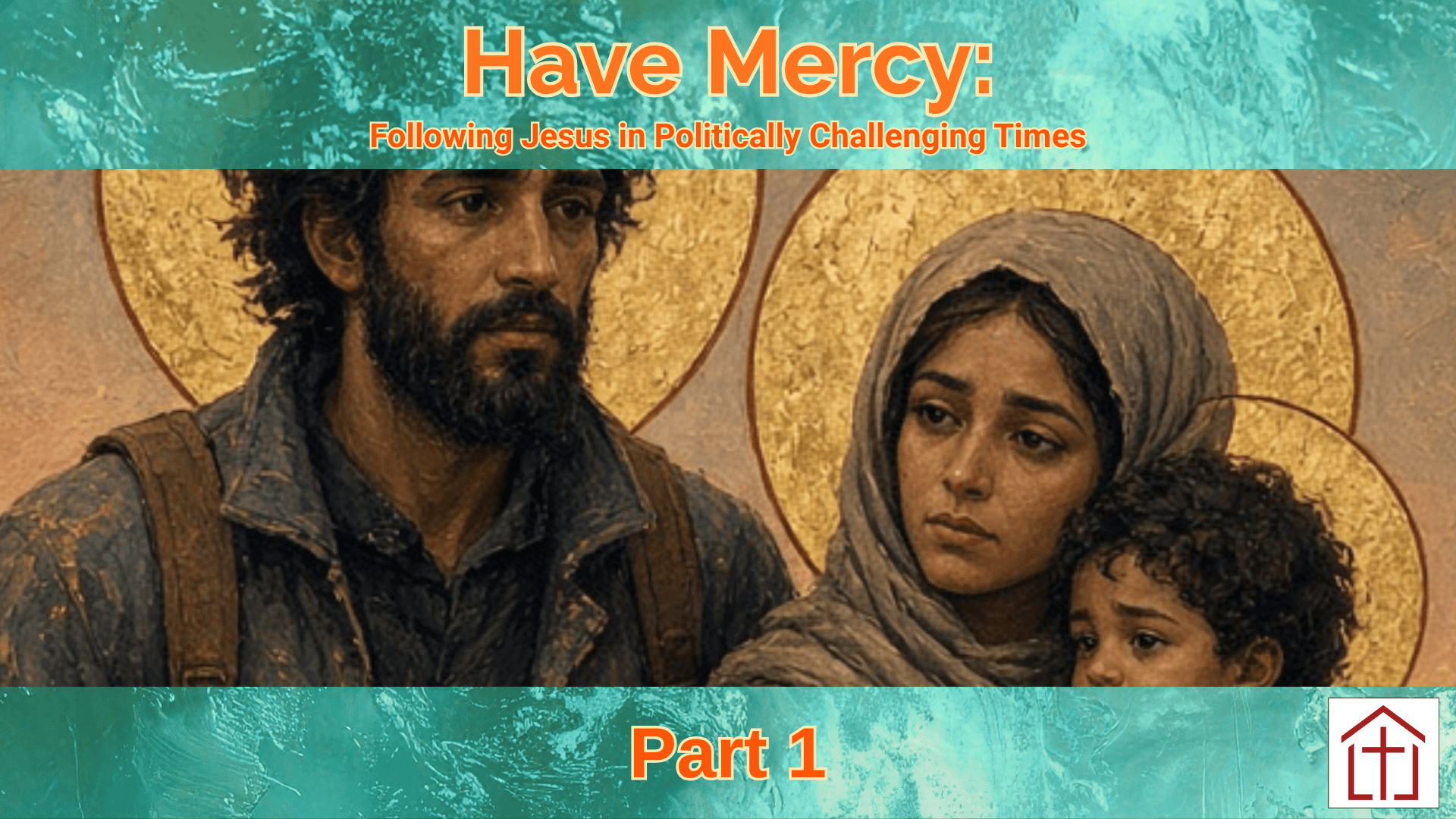
Have Mercy: Following Jesus in Politically Challenging Times -
Encouragement to bear courageous witness rooted in the Gospel. An invitation to consider together how core Gospel commitments such as loving our neighbor, welcoming the stranger, and telling the truth can shape faithful Christian discipleship in today's political climate.
Introduction
“It is commonplace to say that we live in perilous times. All around us are wars and rumors of wars; principalities and powers that promulgate violence and injustice; and a general dearth of compassion, respect, and charity. Even Christians can fall prey to privileging polarization over Gospel values.”
“When we turn to Scripture, however, we find that while our own situation may be precarious, it is not unprecedented. The biblical story is full of war, tyrants, and the suffering of God’s people. In fact, we do not have to look much further than Acts to find times that seem much like our own.”
“In the midst of the violence and upheaval of Roman occupation, we find the apostles preaching the life, death, and resurrection of Jesus Christ. We read in Acts no matter what swirls around them, the apostles are faithful to the church they are building by making disciples of all nations. They keep preaching and praying and evangelizing, and the Gospel spreads.”
“Following the example of the early Church has now fallen to our generation. We must proclaim the Gospel more clearly and more effectively than ever before, raising our voices above the distortions of authoritarianism and Christian Nationalism that our culture too easily accepts as Christian witness. As our institutions use the privilege and power to resist this co-opting of the Gospel, we must also cast a winsome and compelling vision of God’s Kingdom to people longing to shape lives of meaning, connection, and love.” “[You will find] that the Gospel is political but not partisan, and that there are lively interpretations of Scripture for our time. [There are] fresh ways to proclaim the urgent word that all authority in heaven and earth has been given to the risen Christ.”
The Most Rev. Sean Rowe, Twenty-Eighth Presiding Bishop and Primate of The Episcopal Church
The Meaning of Mercy
“’In the name of our God, I ask you to have mercy upon the people who are scared now.’ The Rt. Rev. Mariann Edgar Budde, Bishop of the Episcopal Diocese of Washington, addressed the conclusion of her sermon for the Washington National Cathedral’s Service of Prayer for the Nation directly to Donald Trump, the newly inaugurated president of the United States (2025). From the historic Canterbury pulpit, the bishop’s plea cut through the rhetoric of triumph (and defeat) to call all those listening to a sacred task.”
“Bishop Mariann Budde addressed the newly inaugurated president and the nation with an
invitation: Have mercy, Have mercy. Though the world was confusing, our fundamental orientation was
clear: We are called to have mercy.”
“Have mercy! It’s an invitation, a demand, a plea, an expression of exasperation. In the American South, it is an adage expressed while clutching pearls, or putting the back of your hand to your forehead. My, my, my, the speaker says while shaking their head. If only the request in this case was so performative. At this moment of peril, the call to have mercy is deadly serious.”
“In Scripture, mercy is first and foremost a property of God. It is a key characteristic of the God of Israel that Christians come to know in Jesus. The cry for mercy directed to God echoes through the testaments. The Hebrew Scriptures affirm that hesed, or mercy, is one of God’ primary attributes. The psalmists call God in prayer to ‘be mindful of your mercy’ (Psalm 25:6). In like manner, the prophets persistently call on God’s mercy. Because of who God is, a God of mercy, the supplicants invite the Holy One to show mercy. This theme continues in the New Testament and the ministry of Jesus. Those seeking healing and deliverance ask Jesus to ‘have mercy’ (Matthew 9:27, 15:22, 17:15, 20:30-1; Mark 10:47-8; Luke 17:13, 18:38-9). Jesus reiterates Hosea’s commendation of the practice of mercy over sacrifice (Hosea 6:6, Matthew 9:13), and in his teaching affirms that ‘blessed are the merciful for they will receive mercy’ (Matthew 5:7). In doing so, Jesus shifts attention from God’s mercy to our own. While mercy is first and foremost a divine quality, Jesus also instructs his followers to show mercy: ‘Be merciful, just as your Father is merciful’ (Luke 6:36).”
“Christians reiterate this scriptural cry and commendation of mercy in our liturgies and prayers. Kyrie eleison, Lord have mercy, is a prayer in Greek that many Christians quickly recognize. The prayer for humble access in the Anglican tradition precedes the Eucharist, the Lord’s Supper, and affirms that ‘thou art the same Lord, whose property is always to have mercy.’ We affirm, again and again, that God’s mercy enables our response. God’s prior action allows us to in turn show mercy to others.”
“The works of mercy- feeding the hungry, clothing the naked, welcoming the stranger, visiting the sick and imprisoned – have long been a central part of Christian piety. Jesus, drawing on Jewish almsgiving and hospitality practices, placed these practices at the center of Christian life in his apocalyptic parable of the sheep and the goats recalled in Matthew 25. He taught his followers that in practices of accompaniment and care, we not only do good works, but we also welcome the very person of Christ. Christians have reasons to engage in this work as Christians. Mercy, the works of mercy, are an irreplaceable part of Christian spirituality.”
(Ruthanna B. Hooke, Kyle B. T. Lambelet, and Altagracia Perez-Bullard, editors, Have Mercy, 2026.)
An invitation to our virtual participants: Discussion and comments are very much encouraged and welcomed. Online discussions can be held in the comments section in the upcoming post on Social Media for this week’s Deacon’s Reflection which is part of adult formation at St. Francis Episcopal Church.
Closing Prayer – Prayer of Blessing
May the light of God illumine the heart of my soul.
May the flame of Christ kindle me to love.
May the fire of the Spirit free me to live this day, tonight, and forever. Amen.
John Philip Newell, Celtic Benediction, p. 5.
For this week: For reflection: What is your concept of the authority of Scripture?
“Have Mercy: Following Jesus in Politically Challenging Times,” Deacon Joe Dzugan, St. Francis Episcopal Church, 2026.